Palm trees are everywhere in the Lowcountry — lining driveways in Mount Pleasant, framing pool decks in Summerville, standing at the entrance of homes throughout Charleston. That's not a coincidence. Palms fit the coastal South Carolina climate, and when planted correctly, they last for decades.
But "planted correctly" is the part that trips people up.
The wrong species, the wrong placement, or a rough installation can leave you with a tree that struggles to establish or ends up in the wrong spot entirely. This guide covers what to know before you plant — and why more Lowcountry homeowners are calling Matthew Ward Landscapes to handle the whole process.
Which Palm Trees Grow Best in South Carolina?
Not every palm you've seen in Florida will thrive here. The Charleston area sits in USDA Hardiness Zone 8b — warm enough for a good range of palms, but cold snaps do happen, and species selection matters.
Palms that perform well in the Lowcountry include:
Sabal Palm (Sabal palmetto) — South Carolina's state tree. Cold-hardy, salt-tolerant, and tough. Ideal for coastal properties.
Windmill Palm (Trachycarpus fortunei) — One of the most cold-tolerant palms available. Compact and clean-looking, good for tighter spaces.
Pindo Palm (Butia capitata) — Also called jelly palm. Slow-growing, feathery fronds, handles full sun well.
Sago Palm (Cycas revoluta) — Technically a cycad, not a true palm, but commonly used for the same effect in landscapes. Low-growing and architectural.
Chinese Fan Palm (Livistona chinensis) — Grows well in the Lowcountry with proper drainage and sun.
Each species has different size requirements at maturity, different sun and drainage tolerances, and different maintenance needs. What works beautifully in one yard may be the wrong call in another.
Matthew Ward Landscapes helps homeowners work through those details before anything goes in the ground.
What Palm Trees Actually Do for a Landscape
A well-placed palm does several things at once.
They add height without bulk. Unlike large canopy trees, palms create vertical presence without crowding out the rest of the yard. That makes them useful in front yards, along property lines, around pools, and near patios — anywhere you want impact without visual weight.
They give newer landscapes an established feel. A freshly planted bed can look sparse for years. A mature palm changes that immediately. It anchors the design and makes the whole yard read as intentional.
They define outdoor living spaces. Lowcountry homeowners spend time outside. Palms around a pool, patio, or outdoor kitchen create a sense of place — a boundary that separates the living area from the rest of the yard without blocking it off.
They hold up in coastal conditions. Salt air, wind, and heat are hard on many plants. The right palm species handles all of it.
Palm Tree Installation: Why It's Not a DIY Project
These trees are heavy. A mature 10-foot Sabal palm can weigh several hundred pounds. Getting it off the truck, positioned correctly, and installed at the right depth requires equipment and experience.
Beyond the physical work, there are decisions that affect how well the tree establishes:
Depth and grade — Plant too shallow and the root ball sits exposed. Too deep and the trunk can rot at the base.
Drainage — Palms don't like wet feet. If the site has drainage issues, that needs to be addressed before planting, not after.
Proximity to structures — A palm that looks appropriately sized today may cause problems near a foundation, roof line, or pool equipment as it matures.
Backfill and soil prep — Lowcountry soils vary. Sandy coastal soil drains fast and may need amendment. Clay-heavy soil holds water and can stress roots.
Matthew Ward Landscapes handles site evaluation before any tree is ordered, so the right palm goes in the right place.
How the Matthew Ward Landscapes Process Works
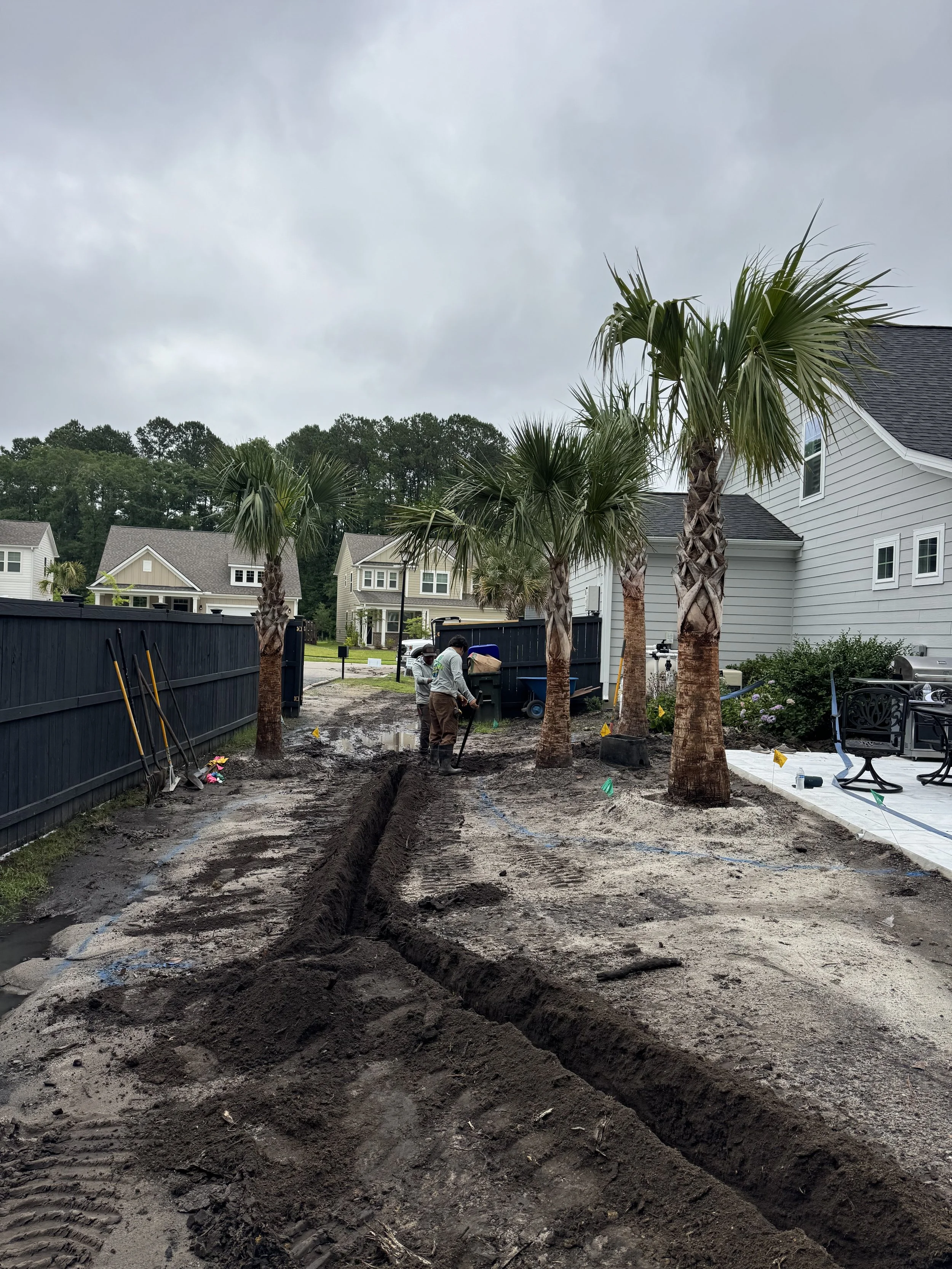
The goal is to make this easy for the homeowner while making sure the installation is done right. Here's what the process looks like:
Site walkthrough — Matthew visits the property to assess sun, drainage, soil, and space before recommending species or sizes.
Palm selection — Based on the site and the homeowner's goals, Matthew recommends specific species and sizes.
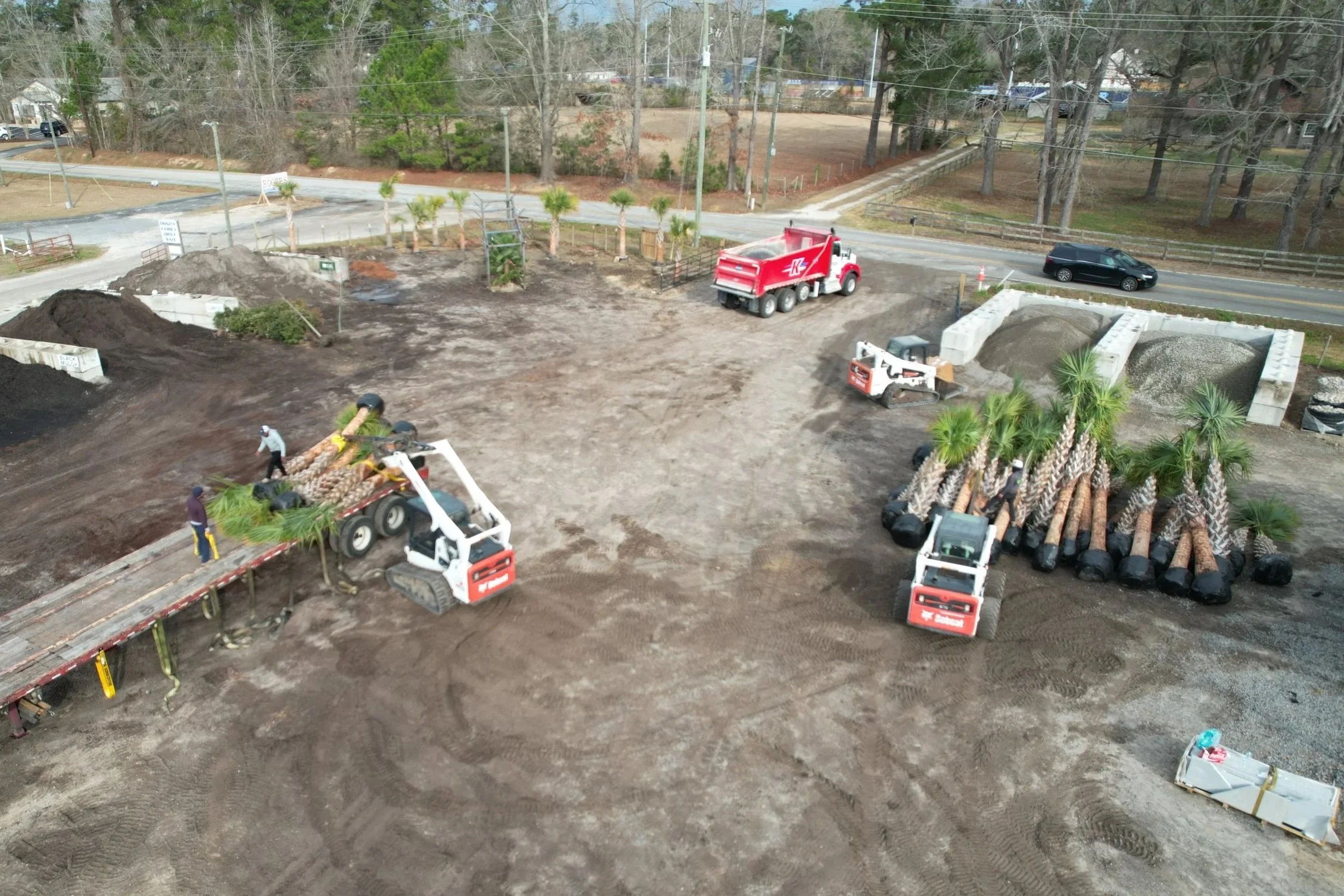
Hand-selection in Florida — Matthew sources palms from a trusted Florida vendor and hand-picks each tree for health, shape, and size. Trees that don't pass inspection don't come back.
Delivery and installation — The team handles transport, placement, and installation. Proper depth, backfill, and any necessary drainage work are included.
Cleanup and finish — The site is cleaned up and the homeowner gets a tree that's ready to establish — not one that still looks like a construction project.
That end-to-end process is why homeowners in Summerville, Charleston, Goose Creek, and across the Lowcountry use Matthew Ward Landscapes for palm installation specifically.
Common Mistakes to Avoid
Even homeowners who do their homework run into problems. The most common:
Buying from a big-box store. The trees are often smaller, stressed from transport and sitting on asphalt lots, and the variety selection is limited. You can't inspect the root ball or assess the overall health the way you can with a hand-selected tree.
Choosing based on looks alone. A palm that photographs well isn't always the right fit for your property. Consider mature size, water needs, and cold hardiness — not just what it looks like in the ground on day one.
Skipping the site assessment. Planting a palm in a low spot with drainage issues is a slow death sentence. Planting too close to the house creates long-term maintenance headaches. Five minutes of planning prevents years of problems.
Underestimating the installation. A palm that falls over because it wasn't braced properly, or sits too high because the grade wasn't right, is a frustrating and expensive fix.
Frequently Asked Questions
What palm trees are native to South Carolina? The Sabal palmetto (cabbage palm) is the only palm native to South Carolina and serves as the state's official tree. It's well-suited to Lowcountry conditions and is a reliable choice for most residential properties.
Do palm trees survive South Carolina winters? Most palms used in Lowcountry landscapes are cold-hardy enough for Zone 8b. Sabal palms, windmill palms, and pindo palms handle the occasional cold snap well. Species from warmer climates — like the coconut palm — won't make it through a hard frost.
How long does palm tree installation take? For most residential installations, the actual planting takes a few hours per tree. The prep work — site evaluation, sourcing, and scheduling — typically takes a week or two depending on availability.
Do palm trees need a lot of maintenance? Palms are relatively low-maintenance compared to many trees. They do benefit from occasional fertilization and may need dead fronds trimmed periodically. Some species self-clean (old fronds drop on their own); others need to be trimmed manually.
How much does palm tree installation cost in Charleston? Cost depends on the species, the size of the tree, site conditions, and how many trees are being installed. Matthew Ward Landscapes provides project-specific quotes after a site walkthrough — there's no one-size-fits-all number for a project like this.
Can palm trees be planted near a pool? Yes, and they're commonly used in pool areas throughout the Lowcountry. Species selection and placement matter — you want a palm that won't drop excessive debris into the water and is sized appropriately for the space. Matthew Ward Landscapes can help you choose the right option for your pool area.
Ready to Add Palm Trees to Your Property?
Matthew Ward Landscapes serves homeowners throughout Charleston, Summerville, Goose Creek, Mount Pleasant, and the surrounding Lowcountry. Whether you want one statement palm near your front entrance or a full pool surround, the process starts with a site visit.
Contact Matthew Ward Landscapes to schedule a consultation.
Matthew Ward Landscapes is a locally owned, family-operated landscape company serving the Charleston and Summerville area.
